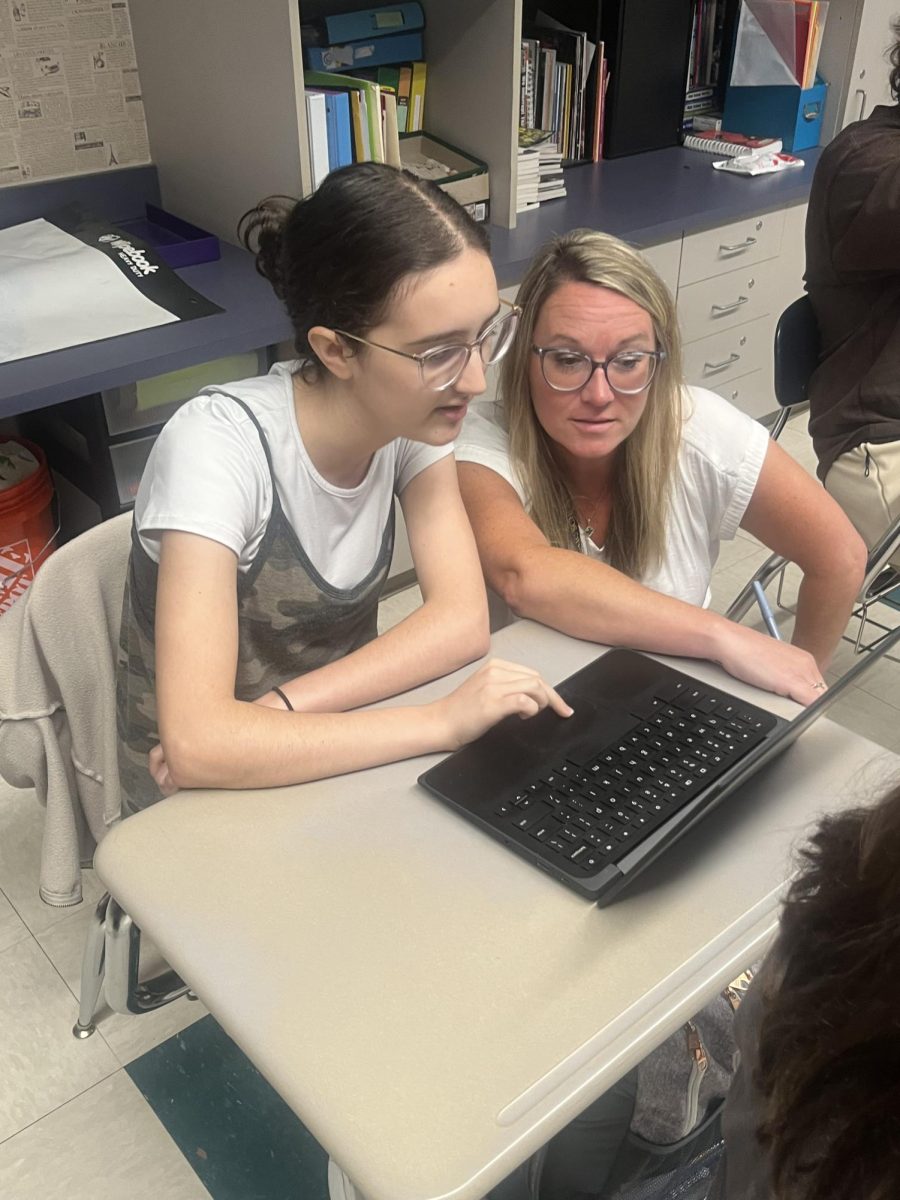















EHHS psychology teacher Mark Tolla says that music can affect both our bodies and our brains. He explained that music can change our heartbeat, our breathing, and even the chemicals in our brain that control how we feel. That’s why music can make us feel all kinds of emotions, and why each person experiences it differently based on their own memories, culture, and personality.
EHHS music teacher and band director Steve Wolf, talked about how people create those feelings in music. He said that the emotions in music depend on why someone is making it, and that people can interpret music in their own way. “He explained that music can express feelings on its own, while songs are a type of music that people make on purpose,” with “While songs are a type of music that people make on purpose, music can express feelings on its own.” You can tell if your music connects with others by seeing how they react or if they feel the same emotions you felt while making it. Sometimes music tells its own story, and other times it shows someone else’s story. Your mood can change how you write music, even if it doesn’t change the final song, because you might feel one way while making it, but want listeners to feel something else. He said that anyone can learn to write music that makes people feel something if they practice, learn the basics, and listen to music that inspires them. Writing music isn’t a special gift; anyone can do it with effort and practice.
Together, both teachers show that music is more than just sound. It can change how we feel, help us understand our emotions, and even connect us with others. Whether we’re making music or listening to it, the experience is personal and meaningful. In the end, music matters because it helps us express ourselves and brings people together.