





















SpaceX is a Starbase, Texas-based company specializing in reusable space rockets. SpaceX was founded in 2002 by Elon Musk in California, and they are currently the biggest space company in the world. SpaceX’s goal is to revolutionize space technology with the goal of enabling human life to become multi-planetary, specifically by colonizing Mars and by building a base on the Moon. Starship’s goal is even more ambitious. SpaceX plans to bring humankind to a Type II civilization level on the Kardashev Scale using the Starship, enabling us to travel to the Moon, Mars, and beyond whilst lifting hundreds of tons to space and coming back down to do that again hundreds, or even thousands, of times with tens of thousands of rockets.
The last time humankind landed on the Moon, the rocket used was NASA’s Saturn V rocket. Saturn V was the masterpiece of Wernher von Braun. At the time, rockets were what we called staged systems: one stage would get the rocket to a certain altitude, then it would eject and the second-stage engines would ignite. The other stages would follow after the one before them, and those ejected massive hunks of steel would fall from the edge of space into the Atlantic Ocean.
The problem with this design, which we have been using from the earliest era of rocketry to even now with NASA’s Space Launch System (SLS), is that they are way too expensive and they are not reusable. For example, the SLS, the latest example of these kinds of systems, will carry astronauts for the Artemis missions and cost around $4.1 billion per launch. That means for five missions it comes up to around $20.5 billion worth of taxpayers’ money being used and then thrown away, or in many cases left in the ocean to never be seen again.
Another problem with this approach is that these systems are only made to be used once, so they are tested far less than reusable systems and it takes even more time to build them because they have to work perfectly on the first attempt, since there usually isn’t a secondary vehicle available to carry on the mission. This is where SpaceX changes the equation.
SpaceX promises a bigger rocket that carries more, is fully reusable, and only costs around $90 million per launch. That means for every single SLS launch you could theoretically build and launch around 45 Starships, and the amazing thing is that those 45 Starships can also be reused and relaunched rapidly while carrying bigger payloads and more people to space than the SLS could ever hope to carry.
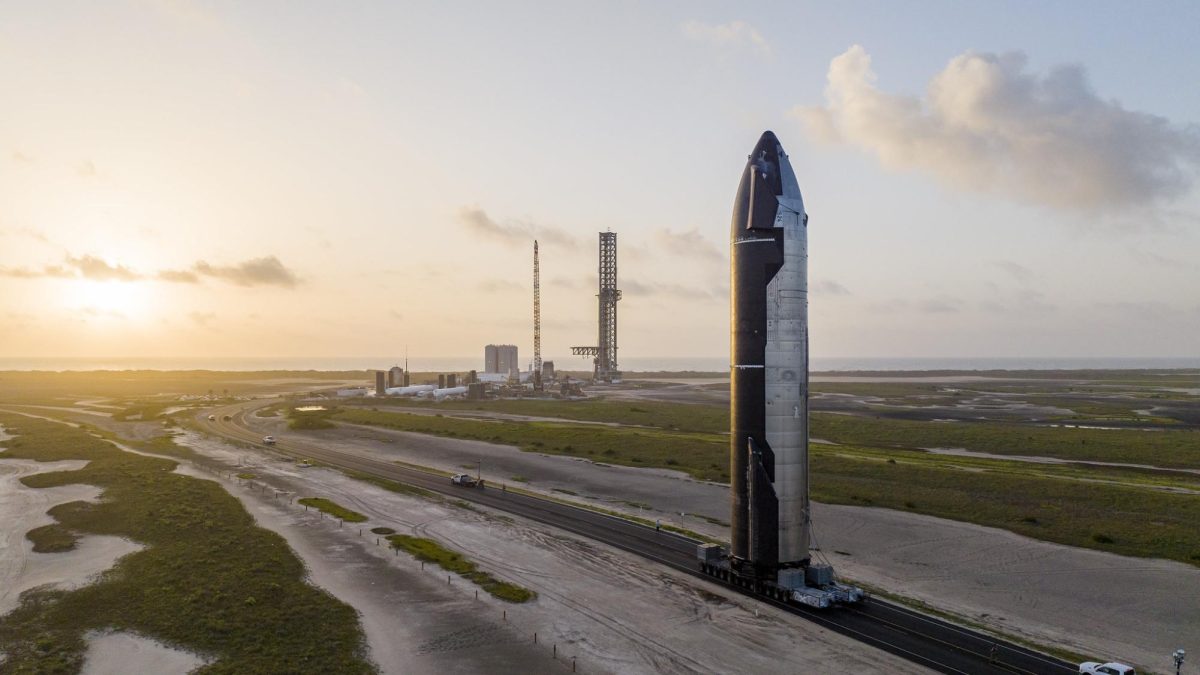
Starship Super Heavy is a next-generation, fully reusable, super heavy-lift launch vehicle designed to transport crew and cargo to Earth orbit, the Moon, Mars, and beyond. The current rocket has two main versions: the latest “normal” version, the Starship V3 with the Super Heavy V3 booster, and the HLS (Human Landing System) version that will also use the Super Heavy V3. HLS is being built specifically to land humans on the Moon for NASA’s Artemis missions, and it will be one of the two landers expected to bring American astronauts back to the Moon within this decade. SpaceX and NASA are already working very closely together, and the Starship HLS is one of the biggest examples of that partnership. SpaceX also regularly works with the United States Space Force by launching missions using its reusable Falcon 9 rockets.
The Starship Super Heavy is a two-stage rocket with two separate, but reusable rockets. Other rockets have not been reusable in the past. The first stage, called the Super Heavy booster, is a massive 72-meter-tall, 9-meter-wide booster powered by 33 Raptor 3 engines. Its mission is to launch the Starship toward low Earth orbit and then come back down to the launch site where it will be caught by Mechazilla, the massive catching arms attached to the Orbital Launch Pad. The second stage, Starship itself, is also massive at around 52 meters tall and 9 meters wide and is designed for full and rapid reusability. The Starship V3 will initially fly with a six-engine configuration using three Sea-Level Raptor 3 engines and three Vacuum Raptor 3 engines, although SpaceX plans to increase that to nine engines in the future with six vacuum engines and three sea-level engines. Combined together, Starship Super Heavy V3 is expected to produce around 18 million pounds of thrust, roughly 10% more than the previous V2 design. For comparison, the Saturn V rocket that carried humans to the Moon only produced around 7.5 million pounds of thrust.
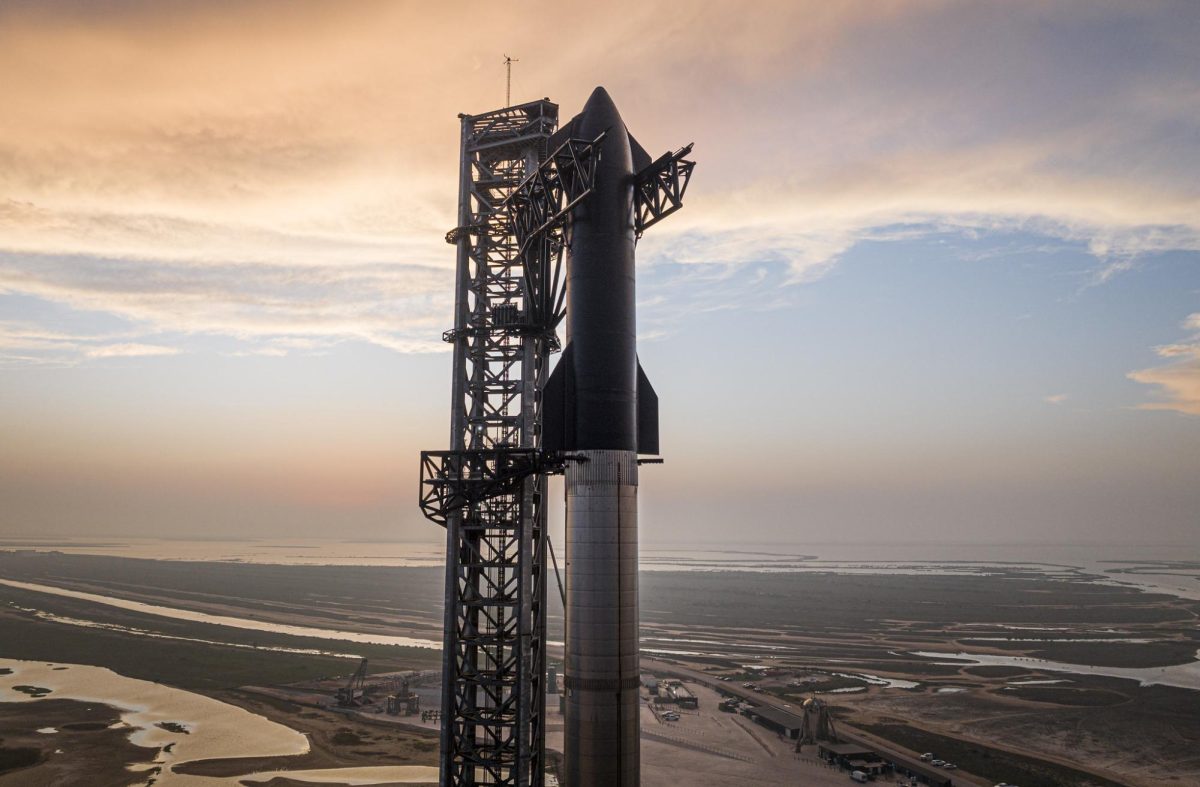
Starship represents the biggest revolution in spaceflight since the partially reusable Falcon boosters developed by SpaceX. The most recent version of the rocket was a partially-reusable Space Shuttle. The version before that was the Saturn V rocket of the late 1960s and 1970s. The Revolution Starship has made meaningful change in the rocket industry. SpaceX wants Starship to become the transportation system that carries humans not only back to the Moon, but onward to Mars and eventually beyond. The company envisions Starship as the bridge between humanity and a future where space travel becomes routine rather than rare.
SpaceX is not completely alone in this race, but it is currently far ahead of the competition when it comes to fully reusable heavy-lift rockets. Before Starship, SpaceX already operated the partially reusable Falcon Heavy, which was essentially three Falcon 9 boosters strapped together to lift heavier payloads into orbit. Other companies are also developing reusable rockets, such as Blue Origin with its New Glenn rocket and Relativity Space with the Terran R. New Glenn follows a more conventional design similar to the Falcon 9 where only the booster is reusable while the upper stage is expendable. Terran R aims to be fully reusable like Starship, but it is much smaller and carries significantly less payload. China also has several startups working on fully reusable rocket systems inspired by Starship, although little is publicly known about many of those projects. Even with increasing competition, SpaceX still appears to be the only company currently capable of building a rocket system at Starship’s scale while aiming for full and rapid reusability.