






















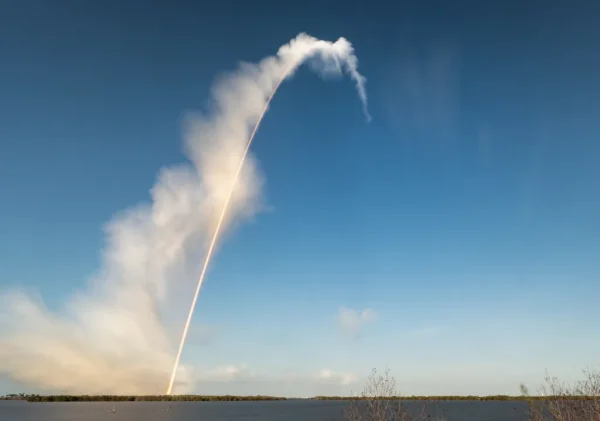
The countdown was ten seconds. As the time slowly ticked down, the weight of anticipation settled upon me. My brother had called me to the TV to see it—and I was glad he did, because when the rocket launched, the size of what I was seeing amazed me. It curved into the air, clouds of smoke trailing behind it. Then, it was confirmed, and cheers resounded on the screen. We’d done it: sent humans back into orbit, heading for the moon. But when they were thousands of miles from Earth, what did they do? What does it mean for man’s journey to outer space?
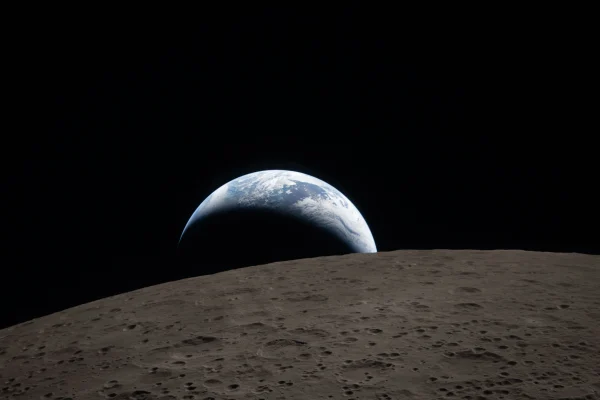
What was the Artemis II mission?
The Artemis II mission was a NASA mission that saw four astronauts board the Orion spacecraft, nicknamed Integrity by the crew, for a lunar flyby.
Who were the astronauts aboard the Integrity for the mission?
Three astronauts were from NASA: Commander Reid Wiseman, Pilot Victor Glover, and Mission Specialist Christina Koch. The fourth astronaut, Jeremy Hansen is from the Canadian Space Agency and is also a Mission Specialist like Koch.
What was the purpose of the Artemis II mission?
The Artemis II mission as a whole was created in preparation for long-term explorations of the moon and potential missions to Mars. Specifically, the mission was for “putting the Orion spacecraft through a series of planned tests to evaluate systems, procedures, and performance in deep space”, according to NASA. Some of the deep-space systems they wanted to test included those of life support, navigation, propulsion, radiation shielding, and thermal protection. While on the Integrity during the flyby, astronauts also observed the moon and performed biomedical studies for long-term missions involving humans. They also practiced procedures for emergencies, launch, flight, and recovery.
Why is the Artemis II mission important?
Artemis II is the first time humans have been beyond low-Earth orbit in 50 years. They traveled a total of 695,081 miles, coming as close as 4,070 miles to the surface of the moon. At its furthest, the Orion went as far as 252,760 miles from Earth, which is 4,105 miles further than the Apollo 13 mission went, making it the furthest that humans have ever travelled from Earth. Artemis II is the first time in a long time that humans have been to space, and it’s the furthest we have ever gone.
When and where did the mission happen?
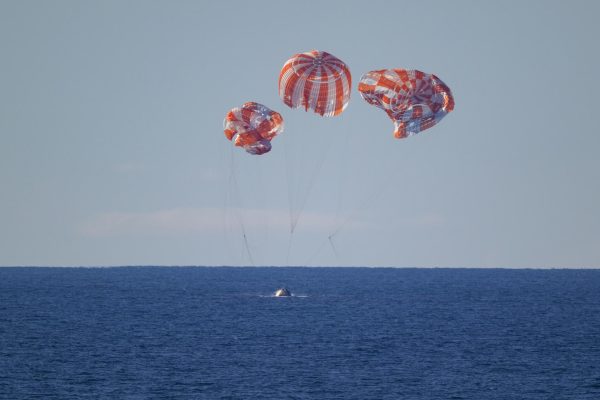
The Orion launched on April 1st at 6:35pm in Merritt Island, Florida from the Kennedy Space Center. However, they didn’t leave Earth’s orbit until April 2nd the next day. When they returned, the Orion landed in the Pacific Ocean off the coast of San Diego at 8:07 pm on April 10th.
Why didn’t Orion land on the moon?
The Artemis II mission was a designed crewed test flight, not a landing mission—meaning that it was only a test where astronauts are on board, not leaving the spacecraft. Because of this, Orion was not built with the technology that would allow the astronauts to land on the moon’s surface. However, private companies like SpaceX and Blue Origin are making ‘lunar landers’ that could be used in future missions.
How much did the mission cost?
Artemis II is part of a larger project of Artemis missions; the project, which included Artemis I and will include Artemis III and IV, costs 90 billion dollars. The Artemis II mission itself costs about 4 billion dollars.
What comes after the Artemis II mission?
With Artemis II being one mission in a project of them, next is the planned Artemis III mission. Artemis III will be a crewed flight that will, according to NASA, “test rendezvous and docking capabilities between Orion and commercial spacecraft needed to land astronauts on the Moon.” The Orion spacecraft will ride into low-Earth orbit where astronauts will perform the tests with one or both commercial landers from SpaceX and Blue Origin. The crew has not been decided yet and the launch is scheduled for 2027 in Florida at the Kennedy Space Center.
Artemis II was an important part of history that we were all lucky to be present for. Now, we can look forward to the next launch in 2027 as NASA continues to keep pushing the boundaries of mankind.